
When your yard doesn’t drain well, water can pool in low spots, damage your lawn, and slowly make its way toward your foundation. A grass swale offers a natural, low-maintenance solution—a gently sloped, vegetated channel that guides water away from problem areas while blending seamlessly into your landscape. Lee Sprinkler & Drainage designs and installs grass swales tailored to your yard’s specific grading and drainage needs.
With over 50 years serving Dallas/Fort Worth homeowners, we know how to work with our region’s soil and terrain to build swales that actually perform. It’s a simple, effective way to help with drainage issues without sacrificing the look of your lawn—so you get better water flow and a yard that still looks great.
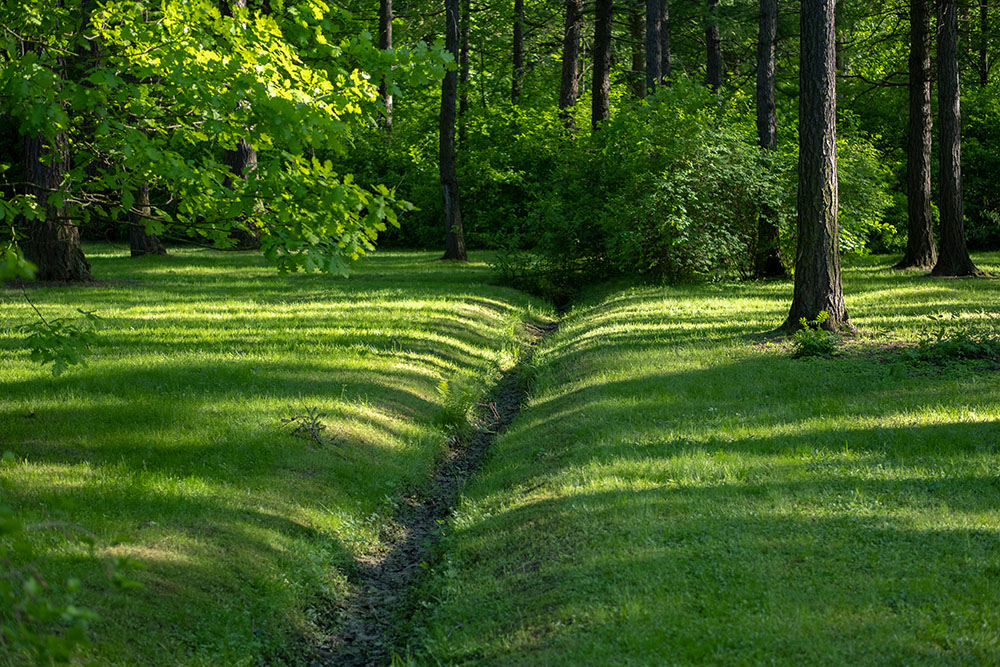
A grass swale is a shallow, vegetated depression designed to guide stormwater runoff across your property in a controlled way — rather than letting it pool or erode your yard, the swale’s shape and slope direct water where it needs to go.
A French drain moves water underground through a buried pipe, while a grass swale manages water on the surface using vegetation, shape, and slope. Swales work well for handling larger volumes of surface runoff and offer a more natural, landscaped look than a below-ground pipe system.
Both. The native plants and grasses used in a swale have root systems that act as natural filters, pulling pollutants out of stormwater as it flows through — so you get flood control and cleaner runoff at the same time.
Swales are one of the most effective tools for reducing flood risk because they slow down and redirect stormwater before it can overwhelm a low-lying area, especially during the heavy, unpredictable rain events North Texas has seen more of in recent years.
We select native plants and grasses specifically for their ability to stabilize soil, absorb water, and resist erosion — the right vegetation is a key part of making a swale both functional and low-maintenance long-term.